My illustration entitled: “The Graves Open at Midnight” – In a moonlit cemetery, flowers lie across an open grave as a resurrected believer rises toward Christ. Just beyond the cemetery gate, the living lift from the road to meet Him in the same light.
How often do we wake up and think, Could this be the day I see Jesus? I wonder how differently I would spend an ordinary Tuesday if that were the first question I asked. There would still be work to do, people to call and promises to keep. But I might take more care over what I said to the people around me. I might settle a quarrel I had let drag on. A person expecting someone he loves carries that expectation into the smallest things.
In Matthew 25:1–13, ten virgins go out with lamps to meet the bridegroom. He takes longer than they expect, and all ten fall asleep. Then comes the cry at midnight: “Behold, the bridegroom cometh.” The lamps need tending, and five of the women have brought oil for the wait. When the bridegroom arrives, those who are ready go in with him to the wedding. By the time the others return, the door is shut.
Jesus tells the story to people who will have to live through the delay. All ten hear the same cry. All ten have to get up in the dark. What sets the wise apart is something they did hours earlier, when they still had time to prepare. That is the part of the story I think about when I hear Jesus say, “Watch therefore” (Matthew 25:13). What am I doing with the time I have before the cry goes out?
Harpazō: The snatching away of the Bride
Paul writes to Christians in Thessalonica who are grieving fellow believers who have died. He tells them that the Lord Himself will descend from heaven with a shout, the voice of the archangel and the trumpet of God. The dead in Christ will rise first. Then those who are alive will be caught up together with them in the clouds to meet the Lord in the air. From that moment, Paul says, they will always be with Him (1 Thessalonians 4:13–18).
The Greek verb behind “caught up” is harpazō (ἁρπάζω), meaning to seize or snatch away. Paul uses a form that means “we will be caught up.” Christ does the gathering. In 1 Corinthians 15:51–53, Paul describes the change as happening in the twinkling of an eye. The dead are raised imperishable, and the living are changed. A person may wait a lifetime for Christ, and the moment of meeting can come in the blink of an eye.
When I speak of the Bride being snatched away, or commonly known as the Rapture, I am bringing Paul’s account of the gathering together with Scripture’s picture of the Church belonging to Christ as a bride to her bridegroom (Ephesians 5:25–32 and Revelation 19:7–9). Think of what Paul’s words would have meant to someone who had just buried a husband, a sister or a child who trusted in Jesus. The dead in Christ will rise first. Those still alive will meet the Lord together with them. Paul ends by asking the Thessalonians to comfort one another with this promise.
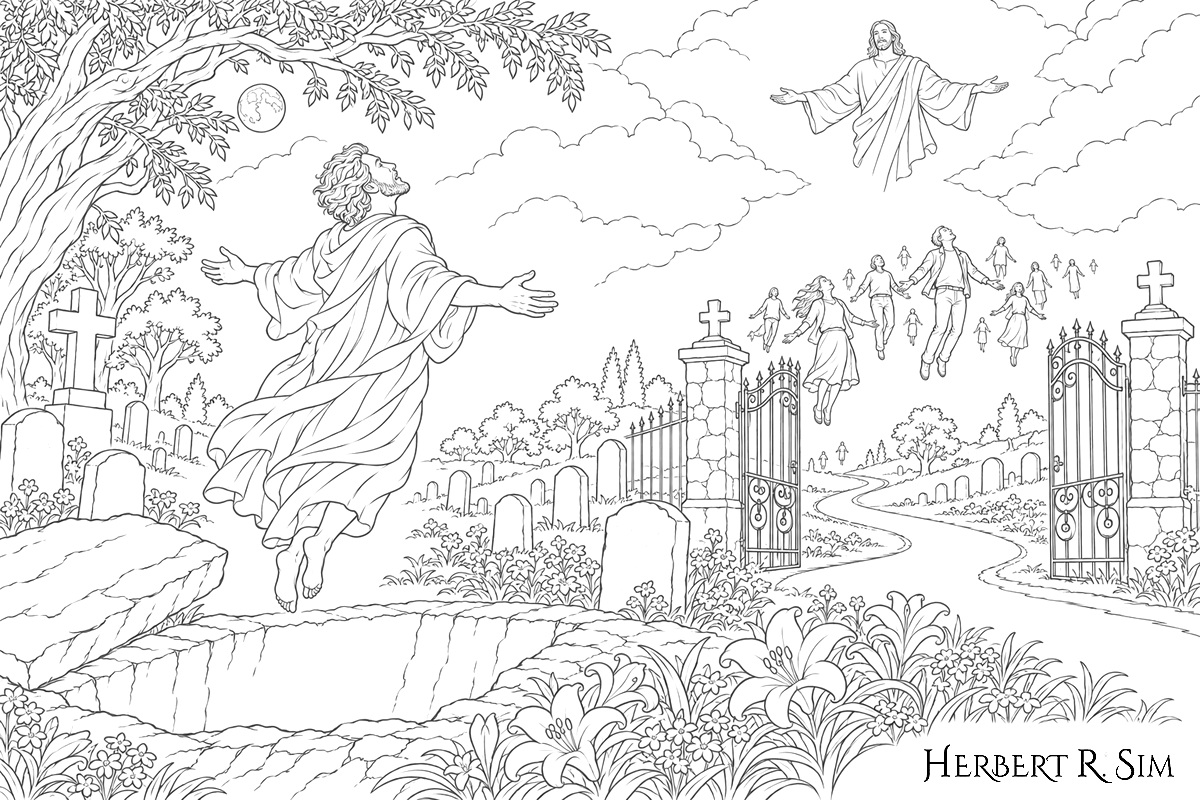
My illustration “The Graves Open at Midnight” work-in-progress. The art represents that when Christ returns, the dead in Him will rise and the living will join them, fulfilling the hope that kept the faithful watchful.
Why I believe the rapture comes before the Tribulation
In Titus 2:11–14, Paul tells believers to live soberly, righteously and godly as they look for the “blessed hope,” the appearing of Jesus Christ. The blessing is that we get to see the One who gave Himself for us. I believe the Church can look forward to that meeting before the Tribulation. Titus gives the hope its name, and several other passages help explain why I expect the Bridegroom to gather His Bride before that time of judgment begins.
Paul connects waiting for Jesus with deliverance from coming wrath. In 1 Thessalonians 1:9–10, believers turn to serve the living God and wait for His Son from heaven, Jesus, who delivers them from the wrath to come. Immediately after describing the gathering in chapter 4, Paul speaks about the Day of the Lord and says that God has appointed believers to obtain salvation through Jesus Christ (1 Thessalonians 5:1–11). Christians already know what it means to suffer and to be persecuted. Paul even prepares this same church for affliction in 1 Thessalonians 3:3–4. I understand the coming wrath in chapter 5 as divine judgment and the gathering in chapter 4 as the way Christ brings His people to Himself before it falls.
Jesus speaks of keeping believers from the hour of trial. The promise in Revelation 3:10 is addressed to the church in Philadelphia. Jesus commends its endurance and promises to keep it “from the hour of temptation” coming upon the whole world. I take that promise to a particular church seriously, especially because Jesus describes the trial as worldwide. The word hour draws my attention. The promise concerns a period of testing, and I read it as fitting the hope that Christ will gather His Church before that period begins.
Jesus promises to come and take His disciples to Himself. In John 14:1–3, He comforts troubled disciples with the promise that He will prepare a place for them in His Father’s house and return to receive them. I hear the same note of homecoming in Paul’s account of meeting the Lord in the air. In Revelation 19:7–16, John hears the announcement of the marriage supper of the Lamb before he sees heaven open and Christ ride out to judge the nations. I take these scenes together as a picture of Christ gathering His Bride and later appearing in judgment.
Matthew 24:29–31 deserves careful attention. Jesus speaks there of a gathering after the tribulation of those days, and some Christians understand it as the same gathering Paul describes. I read Matthew’s scene in the context of the Son of Man appearing in glory after the Tribulation. Paul, meanwhile, describes the dead in Christ rising and believers being caught up to meet their Lord. My pre-tribulation conviction rests on how those accounts fit with Paul’s promise of deliverance and Christ’s promise concerning the hour of trial. Fellow believers can read the sequence differently and still be looking eagerly for the same Lord.
The Bride counts the days
A bride who loves her bridegroom counts the days because she wants to see him. If we truly see ourselves as Christ’s Bride, there should be room in our daily lives for that kind of yearning. We can count down in our hearts every day, even with the date hidden from us. Jesus places the day and hour with the Father (Matthew 24:36). I can still pray each morning, Lord, I would love to see You today. That prayer tells me something about where my heart is. If the thought of seeing Christ seldom crosses my mind, I want to ask what has been occupying it instead.
In Mark 13:33–37, Jesus pictures a man leaving his house and giving each servant work to do. The doorkeeper is told to watch. I like that Jesus gives the household both a watch and a day’s work. If I believe the Bridegroom could come today, I can keep praying for the people I love, give my attention to the work entrusted to me and make good on what I promised yesterday. I want Him to find me doing those things with the door of my heart open.
Just before the parable of the virgins, Jesus tells of a servant who decides his master is taking too long and begins beating his fellow servants (Matthew 24:45–51). The master’s apparent delay exposes something in the servant’s heart. I think about that whenever Christians berate one another for watching for Christ or mock someone for saying they hope He comes soon. We can question a date, examine an interpretation and open the Scriptures together. A fellow believer’s longing for Jesus deserves to be treated with care. Paul speaks with affection of all who love Christ’s appearing (2 Timothy 4:8). I would rather help another Christian keep their lamp ready than make them feel foolish for carrying it.

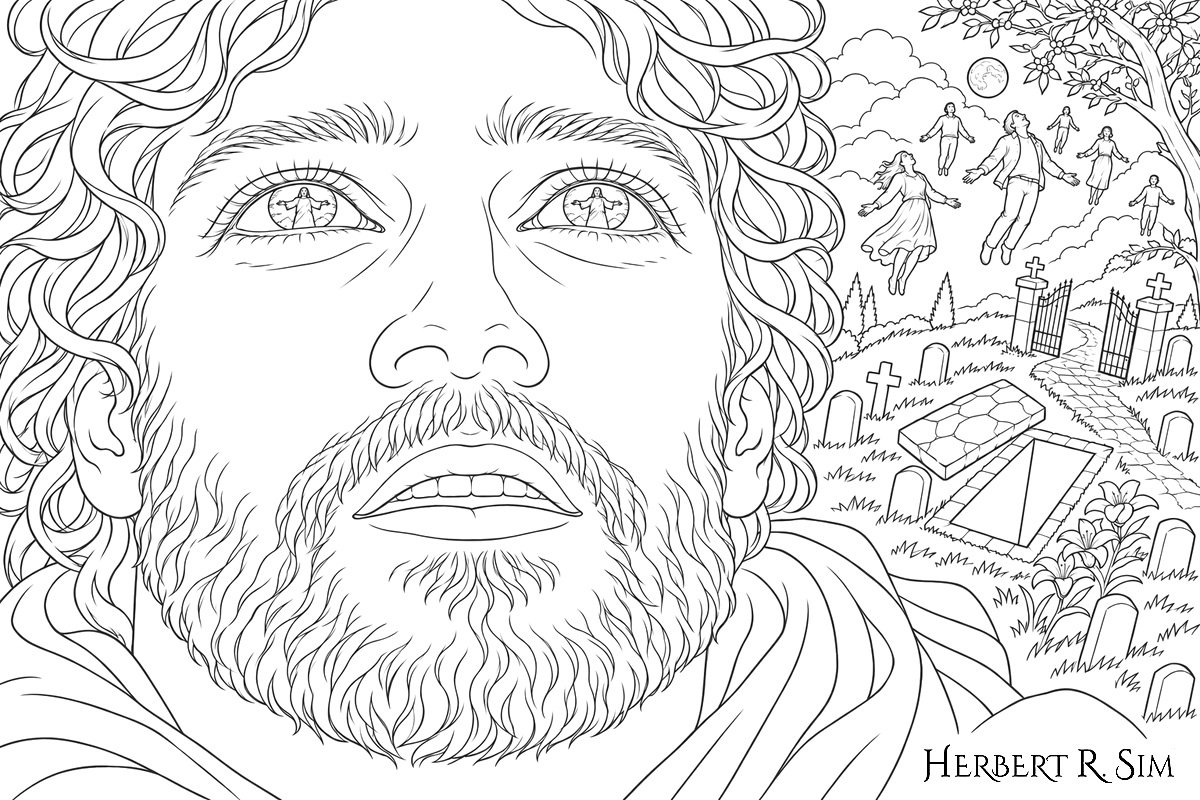
My illustration “The Reflection in Watchman’s eyes” – An extreme close-up shows a weary watchman’s face lit by a single flame. Reflected in his eye, Christ appears through a break in the clouds. After a night of watching, the watchman’s expression shifts from exhaustion to recognition.
What the watchmen see
Jesus tells His disciples they will hear of wars and rumours of wars. He speaks of famines and earthquakes, and Luke’s account includes commotions and pestilences (Matthew 24:6–8 and Luke 21:9–11). Jesus calls these troubles the beginning of birth pains and tells His disciples that the end is still to come. Revelation 6:5–6 gives another image worth sitting with: a measure of wheat costs a denarius, roughly a day’s wage. Imagine working all day and spending what you earned on the grain you need to eat.
Those passages come to mind when I read of volcanic eruptions that drive families from their homes, earthquakes that flatten neighbourhoods, and floods that sweep away a season’s work. Wars and riots can empty streets that were busy the day before. A drought can destroy a harvest and deepen famine. An economic crash can leave people who worked for years suddenly wondering how they will feed their children. Earthquakes, famine and war appear directly in Jesus’ teaching. Eruptions, floods, riots, drought and financial collapse help me picture the wider distress that can overtake a society.
I take these upheavals as reasons to pay attention and remember what Jesus said. His words about wars also teach patience: the first report of trouble tells us very little about when the Bridegroom will come. It may tell us quite a lot about who needs our help today. When a family has lost its home to floodwater or its livelihood to drought, there is a chance for Christians who are watching to make the love of Christ tangible. The news can send me to prayer, and prayer can send me to the person who needs a meal or a place to stay.
From the midnight cry to the trumpet of God
In the parable, a cry breaks the silence at midnight. In Paul’s letter, the trumpet of God sounds as the Lord descends to gather His own. Reading those passages together makes me think of Israel’s Feast of Trumpets. Leviticus 23:23–25 describes a sacred assembly marked by the blowing of trumpets, and Numbers 29:1 calls it a day for sounding them. Could that appointed feast foreshadow the day the Bridegroom calls His Bride to Himself? It is a question I want to give more thought.
For today, I keep coming back to the wise virgins and the oil they brought with them. They had made ready while the road was quiet. We have this day to pray, to make peace with a fellow servant, and to tell Christ honestly how much we want to see Him. If the cry comes at midnight, may it find us ready to go out and meet Him.
Even so, come, Lord Jesus. (Revelation 22:20)